

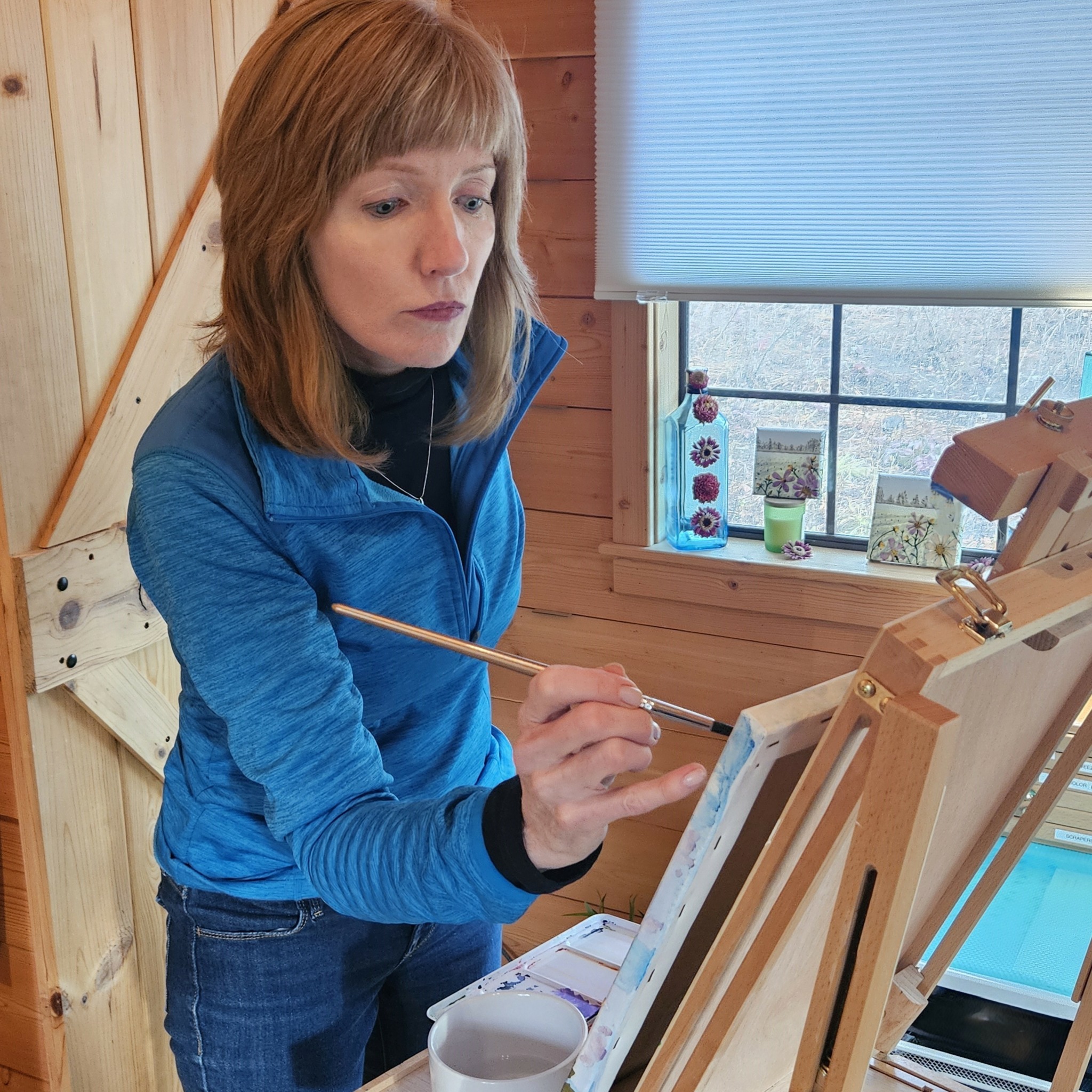

We’re excited to introduce you to the always interesting and insightful Jane Beisell. We hope you’ll enjoy our conversation with Jane below.
Jane, appreciate you joining us today. Can you talk to us about how you learned to do what you do?
I learned as I created: trial-and-error, watching other artists work in various mediums online, and continuing education coursework were all part of my journey. Being an A-type personality, I’m all about finding the ‘most efficient’ way to approach something. That mindset served me well in my prior career as a project manager and cost control engineer, but I’ve learned it doesn’t always serve the artistic process! I started my art journey in 2023 and feel I’m only now hitting my stride. Botanicals on canvas are my niche, and early on I wasn’t finding much guidance online in this specific area—which meant more experimentation and slower progress initially.
What could have sped up my learning? Honestly, giving myself permission to create “bad” art sooner. I spent too much time researching the “right” way instead of just diving in. Also, connecting with other botanical artists earlier—even if they worked in different mediums—would have accelerated my growth through shared techniques and honest feedback.
Essential skills? The technical skills can be learned, but mindset is everything: persistence, willingness to experiment, discipline, self-motivation, openness to rejection and criticism, plus critical thinking and problem solving. And if you plan on monetizing your work, business acumen becomes non-negotiable.
Current obstacles? Time is my biggest constraint now. By choosing to turn my art into a business, I’ve added marketing, social media management, and administrative tasks that pull me away from both creating and learning. These could be outsourced—if I had unlimited funds! For now, it’s a careful balancing act between building the business and nurturing the craft that made the business possible in the first place.
As always, we appreciate you sharing your insights and we’ve got a few more questions for you, but before we get to all of that can you take a minute to introduce yourself and give our readers some of your back background and context?
Who I am and how I got here: I’m a botanical artist specializing in pressed flower art on canvas—a medium that bridges the gap between nature preservation and fine art. My journey here was anything but linear.
I spent 35 years in the corporate world with roles ranging from accountant to insurance underwriter to project manager and cost control engineer in construction, with a few entrepreneurial detours along the way—dog walking, professional organizer, and cost control consulting. That varied background gave me a unique toolkit: attention to detail, problem-solving skills, the ability to see systems and patterns, and perhaps most importantly, the resilience that comes from reinventing yourself multiple times.
But the real catalyst for my art journey was deeply personal. During Covid, my mom was diagnosed with Alzheimer’s. Watching her slip away, I desperately wanted to find ways to stay connected with her. I started painting rocks for her — something simple and tactile. She loved to give them to friends or place them in the garden. Silly, cartoonish animals to bring a smile or inspirational words — words that she was losing. Those painted rocks became a bridge between us when so much else was falling away.
From rocks, I discovered flower pressing when we moved to a rural setting. There was something profoundly meaningful about preserving beautiful, fleeting moments—capturing blooms at their peak and making them last. It resonated with what I was experiencing with my mom: this desire to hold onto precious moments that were slipping through my fingers. The patience required, the acceptance of imperfection, the collaboration with nature rather than control over it—these lessons from pressing flowers taught me things I couldn’t learn in any boardroom.
What began as a way to connect with my mom during her illness evolved into a full-fledged passion and, eventually, a business. Now I create one-of-a-kind botanical art pieces using real pressed flowers, foliage, and natural materials arranged and preserved on canvas.
What I create:
I create one-of-a-kind botanical art pieces using real pressed flowers, foliage, and natural materials arranged and preserved on canvas. Each piece is a celebration of nature’s intricate beauty—the delicate veining in a petal, the graceful curve of a stem, the unexpected color variations that emerge during the pressing process. My work ranges from intimate studies of single blooms to elaborate compositions that capture the abundance of a garden in full flourish.
Unlike prints or paintings, every piece I create is truly unique. The flowers I use are harvested at their peak, carefully pressed and dried, then thoughtfully arranged to highlight their natural beauty. The process can take weeks from harvest to finished piece, as flowers must be properly dried to preserve their color and form before being sealed and protected for longevity.
What sets me apart:
Several things distinguish my work in the botanical art space:
The engineering mindset meets artistic intuition: My background in project management and problem-solving gives me a unique approach to the technical challenges of preserving organic materials. I’m constantly experimenting with pressing techniques, preservation methods, and materials to improve longevity and color retention—treating each challenge as a puzzle to solve rather than a limitation to accept.
Working within nature’s constraints: I don’t fight against what the flowers want to do—I work with their natural tendencies. If a petal breaks, it becomes part of the design. If a flower dries in an unexpected color, I find ways to make that beautiful. This philosophy of “nature as collaborator” means my work has an organic authenticity that can’t be forced or replicated.
Niche focus: Pressed botanicals on canvas is a specific niche within botanical art, and when I started, there weren’t many resources or artists working specifically in this medium at a professional level. I’ve had to develop many of my own techniques through trial and error, which means my approach is fresh and evolving rather than following established formulas.
What problems I solve:
For my clients, I create:
– Meaningful, nature-inspired art for spaces that feel disconnected from the outdoors
– Conversation-starting focal points that bring organic texture and genuine uniqueness to homes and offices
– Gifts with deep personal meaning—nothing says “thoughtful” quite like art made from flowers that hold special significance
What I’m most proud of:
I’m proud that I took the leap—that after 35 years in the corporate world, I had the courage to put myself out there in a completely new field where I had no established credentials, no safety net, and everything to learn. Starting over is terrifying at any age, but there’s something incredibly freeing about building something from scratch based purely on passion and persistence.
I’m also proud of the professional recognition I’ve received so quickly. In January 2024—less than a year into my serious art practice—I was selected for entry in my very first juried competition submission. That validation meant everything. Since then, I’ve been selected for several juried shows both online and in galleries, and my work was recently featured in Monochromica Magazine. Each acceptance feels like confirmation that I’m on the right path, that the risk was worth it, and that my unique approach to pressed botanicals resonates beyond just my own vision.
But mostly, I’m proud when a client sees their finished piece and tears up because I’ve captured something they didn’t even know they wanted preserved—a moment, a memory, a connection to nature that they can now keep forever. That emotional response reminds me why I started this journey in the first place: to preserve beautiful, fleeting moments and make them last.
What I want you to know:
My work is for people who appreciate the imperfect beauty of nature, who understand that handmade means one-of-a-kind (not flawless), and who value the story behind the art as much as the art itself. Each piece carries the history of where those flowers grew, when they bloomed, and the careful attention given to preserving them at their most beautiful moment.
I’m still relatively new to this journey—started in 2023 and only now feeling like I’m truly hitting my stride—which means my work is constantly evolving. Following along means watching an artist develop in real time, experimenting with new techniques, pushing boundaries, and occasionally sharing the spectacular failures alongside the successes.
If you’re drawn to art that connects you to nature, values craftsmanship over mass production, and brings genuine uniqueness into your space, I’d love to have you follow along on this journey.
Have any books or other resources had a big impact on you?
Two books I’d highly recommend: one business-specific and one art-specific, both of which have profoundly shaped how I approach my work.
“Why Simple Wins” by Lisa Bodell – This book was a game-changer for my business thinking. Bodell’s core message is that by breaking everything down into its simplest form, you give yourself the space to thrive—and create. It’s about ruthlessly eliminating tasks that aren’t moving you toward your goals. As someone who came from the corporate world where complexity often masquerades as importance, this was permission I didn’t know I needed. In my art business, this philosophy helps me stay focused: Does this social media post serve my goals? Does this administrative task actually move the needle? If not, it gets cut or simplified. That clarity creates breathing room for the actual art-making.
“Drawing on the Right Side of the Brain” by Betty Edwards – This book literally illustrates my journey. I’m naturally very left-brain—linear, logical, analytical. I told myself for decades that I wasn’t an artist, that creativity wasn’t “my thing.” Turns out that was just my Left Brain’s critical internal dialogue running the show. That voice is incredibly useful in cost control and project management, but it’s absolutely destructive in creative space. Edwards’ book taught me to recognize when that critical voice is sabotaging me and how to shift into a different mode of seeing and thinking. It’s not about lacking artistic ability—it’s about learning (or re-learning) to access the capabilities we each inherently have. Her exercises on viewing the world differently, seeing relationships and negative space rather than named objects, fundamentally changed how I approach my botanical compositions. I stopped trying to arrange flowers “correctly” and started seeing them as shapes, lines, and spaces in conversation with each other.
The common thread: Both books challenged me to unlearn unhelpful patterns—whether that’s unnecessary complexity in business or the critical internal voice that shuts down creativity before it can begin. They’ve helped me build a practice that’s both professionally viable and artistically fulfilling.
What’s the most rewarding aspect of being a creative in your experience?
Without question, it’s watching someone light up when they view my work. There’s this moment—you can see it happen—where they step closer, their expression shifts, and suddenly they’re connecting with the piece on a level that goes beyond “that’s pretty.”
I love hearing the stories that follow. Someone will see a particular arrangement and tell me about their grandmother’s garden, a wildflower meadow from childhood, or their wedding bouquet. They share what memories the piece brings back, what feelings it evokes—often emotions they didn’t expect.
What makes this especially meaningful is that I’m working with real flowers—actual pieces of nature that once bloomed and would have faded away. When someone tears up because a piece reminds them of their mother’s rose garden, or gets quiet and contemplative because the colors transport them somewhere peaceful—that’s when I know the work matters beyond aesthetics.
Those moments of genuine human connection are why I do this. Art isn’t just about what I create; it’s about what happens in the space between the work and the viewer.
Contact Info:
- Website: https://www.leftbraincreative.art
- Instagram: https://www.instagram.com/leftbraincreative.art/
- Facebook: https://www.facebook.com/profile.php?id=61569970852177
- Linkedin: https://www.linkedin.com/in/jbeisell/
- Youtube: https://www.youtube.com/channel/UCHMjUOO4mzWKDpOLrbFA3qg
- Other: Teravarna solo gallery: https://www.Teravarna.com/artists/jane-beisell
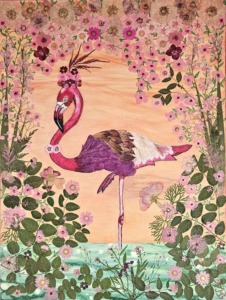
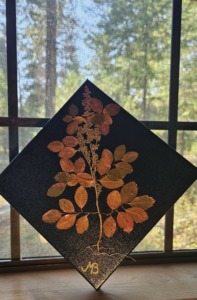
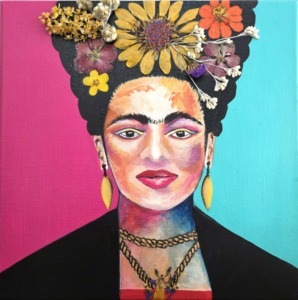
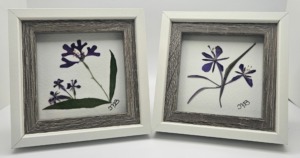
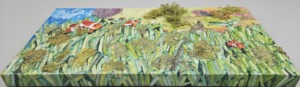
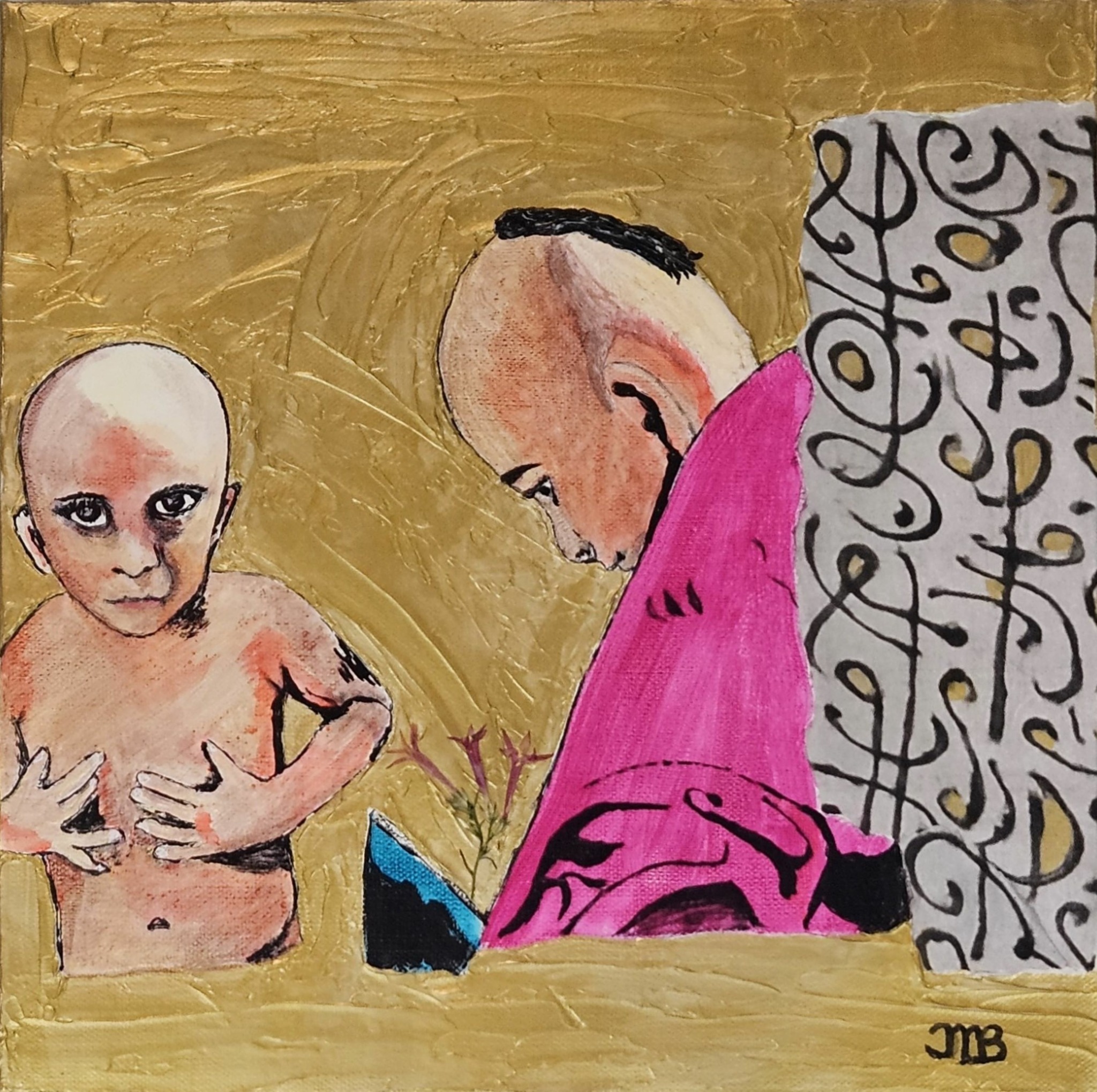
Image Credits
Jane M. Beisell, Left Brain Creative – Art by JMB